Boxing Glove Types Explained: Safety and Performance

Choosing the right boxing gloves goes far beyond style or color for every serious boxer. For both training and competition, gloves serve as critical protection that reduces injury risk for you and your opponent. Modern boxing gloves are designed with cushioned padding to absorb and distribute impact, making sessions safer and letting you perform at your highest level. This guide will break down the definition and key purposes of boxing gloves, helping you select gear that matches your training needs and keeps you safe.
Table of Contents
- Boxing Gloves: Definition And Key Purposes
- Training, Sparring, And Competition Gloves Compared
- Features And Materials Influencing Glove Performance
- Choosing The Right Glove For Safety And Comfort
- Common Mistakes And What To Avoid
Key Takeaways
| Point | Details |
|---|---|
| Boxing Gloves Protect Both Fighters | Gloves cushion impact forces, safeguarding the hands of the striker and reducing trauma on the opponent’s head. |
| Choosing the Right Gloves is Essential | Training, sparring, and competition gloves serve distinct purposes; selecting the wrong type can compromise safety and performance. |
| Quality Materials Enhance Performance | Genuine leather offers durability and comfort, while synthetic options provide affordability. The choice directly impacts glove longevity and safety. |
| Proper Care is Crucial | Regular maintenance, proper hand wrapping, and timely replacement of worn gloves prevent injuries and prolong glove lifespan. |
Boxing gloves: Definition and key purposes
Boxing gloves are cushioned gloves that protect both your hands and your opponent during training and competition. They’re engineered to absorb and distribute impact forces across a larger surface area, which fundamentally changes how boxing works compared to bare-knuckle fighting.
Think of them as shock absorbers for your hands and your opponent’s face. Without them, punching causes serious injuries like broken hands, fractured knuckles, and severe facial trauma. With them, you can train harder and safer.
What boxing gloves actually do
Boxing gloves serve multiple critical functions:
- Cushion impact forces during strikes and sparring sessions
- Protect your hands from fractures, sprains, and long-term damage
- Protect your opponent’s head and face from severe cuts and concussions
- Support your wrists during powerful punches and combinations
- Allow extended training without accumulating career-ending injuries
The padding inside these gloves works like a sophisticated compression system. When your fist connects with a target, the foam and layers compress gradually, slowing down the deceleration and spreading impact over milliseconds rather than instantaneously.
How they reduce injury risk
Research shows that boxing gloves buffer impact forces significantly compared to bare-knuckle situations. Modern gloves are specifically designed with multiple foam densities that work together.
Your hands contain 27 small bones in each palm. Without gloves, each punch risks breaking multiple carpal bones. The padding prevents this by:
- Spreading force across your entire fist and wrist
- Extending the impact duration
- Reducing peak force transmitted to fragile hand structures
- Stabilizing your wrist during rotational movements
For your opponent, gloves reduce the severity of head trauma. A bare-knuckle punch concentrates force into a small area, potentially causing skull fractures or intracranial bleeding. Gloves distribute that same energy across a wider surface.
Why both safety and performance matter
Modern boxing gloves are non-lethal equipment designed to protect both fighters. This distinction matters because it fundamentally changed boxing from a brutal spectacle into a sport where athletes could have long careers without permanent disability.
The gloves also improve your performance. Proper wrist support from quality gloves means you can throw more powerful combinations without hand fatigue or injury. You’ll train longer, recover faster, and develop better technique because you’re not managing pain.
Quality boxing gloves protect your career, not just your next sparring session.
Pro tip: Choose gloves matched to your training type—lighter gloves for heavy bag work, heavier padded gloves for sparring—since different training demands require different protection levels.
Training, sparring, and competition gloves compared
Not all boxing gloves are created equal. The gloves you wear for heavy bag training differ significantly from those you’d use in sparring or sanctioned competition. Each type serves a specific purpose, and choosing the wrong gloves for your activity can compromise your safety or hinder your development.
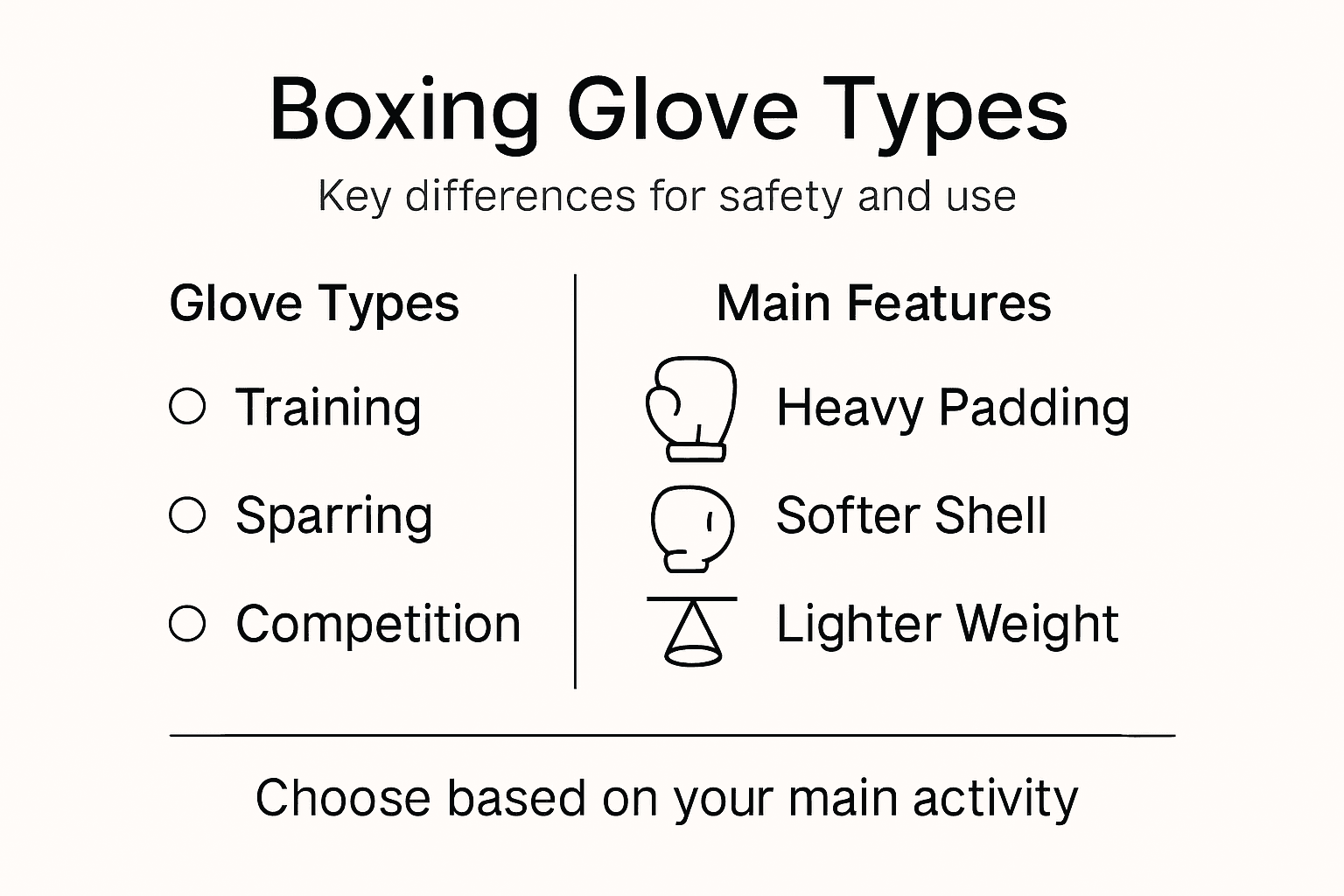
Understanding these differences helps you invest wisely in your equipment and train smarter.
Training gloves for heavy bag and pad work
Training gloves prioritize hand protection and durability over everything else. You’ll be striking hard surfaces repeatedly, so these gloves feature reinforced padding on the knuckle area.
Key characteristics of training gloves:
- Lighter weight (10-12 ounces for many boxers)
- Extra padding on knuckles and wrist
- Stiffer construction to withstand constant impact
- Less hand mobility than sparring gloves
- Designed for 200+ hours of heavy contact
When you’re hammering the heavy bag, your gloves absorb tremendous force repeatedly. Training gloves are built to last under these conditions. They typically feel tighter and more restrictive because the padding is denser and less compressible.
Many boxers notice that training gloves feel “stiff” during the first few sessions. This stiffness is intentional—it provides stability and protection. After 10-15 hours of work, the padding breaks in and becomes more comfortable.
Sparring gloves for partner work
Sparring gloves prioritize comfort and opponent protection over longevity. You’re now hitting another person’s head and body, so these gloves feature softer, more responsive padding.
Key differences from training gloves:
- Heavier weight (14-16 ounces minimum)
- Softer, more compressible foam
- Better hand mobility and natural feel
- Larger padded surface area
- Designed to reduce impact force transmission to your partner
The extra weight and softer padding mean your partner feels less accumulated damage during sparring sessions. This is crucial for long-term training partnerships and brain safety.

Sparring gloves feel noticeably different on your hands. They’re looser, more responsive, and allow your hand to move more naturally. This can initially feel awkward if you’ve been training exclusively with heavy bag gloves.
Competition gloves for sanctioned bouts
Competition gloves meet specific regulatory standards set by boxing commissions. These aren’t your personal choice—sanctioning bodies dictate the exact specifications.
Competition glove requirements typically include:
- Weight standards (8-10 ounces for amateur, 8-12 ounces for professional)
- Wrist closure type (lace or velcro)
- Padding density specifications
- Hand position restrictions
- Official inspection before each fight
These gloves balance protection with performance. They’re lighter than sparring gloves but more responsive than training gloves. They must be pre-approved by the sanctioning body for your bout.
Amateur and professional competitions sometimes use slightly different specifications. Check with your local commission or event organizer before purchasing competition gloves. Using non-approved gloves can result in disqualification.
Comparing the three side-by-side
| Feature | Training | Sparring | Competition |
|---|---|---|---|
| Weight | 10-12 oz | 14-16 oz | 8-12 oz |
| Padding | Extra dense | Softer | Regulated |
| Wrist support | High | Moderate | Regulated |
| Durability | Very high | Moderate | Standard |
| Cost | Moderate | Higher | Higher |
| Hand feel | Stiff | Natural | Balanced |
The transition between glove types requires adjustment. If you’ve spent weeks training with 10-ounce bag gloves, 16-ounce sparring gloves will feel dramatically different. Your timing, hand speed, and positioning all shift.
Your glove choice directly impacts your training effectiveness and safety.
Pro tip: Rotate between training and sparring gloves weekly to adapt your hands to different equipment types, ensuring you’re prepared for competition regardless of which gloves you’re assigned on fight day.
Features and materials influencing glove performance
What your gloves are made from directly determines how they perform, how long they last, and how well they protect your hands. The outer shell, padding system, and ventilation features all work together to create a glove that either excels or disappoints during training.
Choosing gloves with the right materials and construction features is one of the smartest investments you’ll make in your boxing career.
Outer shell materials
The exterior of your gloves needs durability and flexibility. Two primary materials dominate the market, each with distinct advantages.
Genuine leather remains the gold standard for professional and premium gloves. Leather is:
- Highly durable and resistant to punctures
- Naturally breathable and moisture-wicking
- Breaks in beautifully over time
- More expensive upfront
- Requires regular conditioning to maintain
Synthetic materials like PU (polyurethane) and vinyl offer budget-friendly alternatives. These leather or synthetic composites enhance durability and flexibility while reducing cost significantly.
Synthetic gloves provide:
- Lower price points
- Easy cleaning and maintenance
- Consistent performance across lifespan
- Less “feel” compared to leather
- Faster break-in periods
Your budget and training intensity determine which makes sense. If you’re training 4-5 days weekly, genuine leather justifies the cost. Casual training or beginners benefit from synthetic durability and affordability.
Here’s a quick reference for materials and their impact on glove performance:
| Material Type | Durability | Comfort | Maintenance |
|---|---|---|---|
| Genuine leather | Lasts years | Molds to hand | Regular care |
| PU (polyurethane) | Several months | Consistent fit | Easy cleaning |
| Vinyl | Moderate | Stiffer feel | Wipes clean |
| Leather composite | Good longevity | Flexible fit | Easy upkeep |
Each material offers different benefits to suit various training needs and budgets.
Padding systems: The heart of protection
Padding is where real protection happens. Modern gloves use sophisticated multi-layered systems rather than single foam blocks.
Multi-layered foam and gel padding systems absorb shock effectively and distribute impact forces. A typical layering system includes:
- Outer compression layer (dense foam for structure)
- Middle absorption layer (medium-density foam)
- Inner gel or specialty foam (impact response)
- Wrist support foam (rigid structure)
Denser padding equals more hand protection but less hand mobility. Softer padding feels natural but compresses more over time. Quality gloves balance these competing demands.
Gel-infused padding represents newer technology. Gel maintains its properties longer than foam alone and responds more consistently to repeated impacts. You’ll find gel in premium and competition-grade gloves.
This summary helps you select padding systems based on training goals:
| Padding System | Shock Absorption | Hand Mobility | Training Suitability |
|---|---|---|---|
| Dense foam layers | High protection | Low flexibility | Heavy bag work |
| Softer foam | Moderate | High | Sparring sessions |
| Gel-infused layers | Consistent | Balanced | Intense, frequent use |
Choose the padding that matches your activity and comfort preferences.
Ventilation and breathability features
Your hands sweat intensely during training. Gloves that trap moisture create discomfort, encourage odor, and degrade padding faster.
Ventilation features like mesh panels and air channels keep gloves cool and dry during sessions. Look for:
- Mesh panels on the thumb and between fingers
- Air channels through padding
- Moisture-wicking inner linings
- Perforated palm areas
These features significantly improve comfort, especially during longer training sessions. A glove that stays dry performs better and lasts longer.
Wrist support construction
Your wrist absorbs tremendous stress. Quality gloves extend support beyond your knuckles down your forearm.
Wrist support features include:
- Rigid foam structure
- Velcro or lace closures for adjustable compression
- Extended padding down the forearm
- Thumb positioning that prevents inward bending
Better wrist support means fewer injuries and more confident punch delivery. This is where premium gloves outperform budget options dramatically.
Premium materials and thoughtful construction reduce injury risk and extend glove lifespan.
Pro tip: Prioritize gel-infused padding and quality wrist support over brand names when selecting gloves, as these core features directly impact your safety and comfort during intensive training.
Choosing the right glove for safety and comfort
Selecting the wrong gloves wastes money and compromises your safety. The right pair feels like an extension of your hands while protecting your investment in your body. Your choice depends on hand size, training goals, budget, and personal preference.
Taking time to choose properly prevents hand injuries and ensures consistent training performance.
Finding your correct size
Glove sizing seems simple but gets overlooked constantly. Wearing gloves that are too tight restricts circulation and causes hand fatigue. Gloves too loose shift during striking and provide inconsistent protection.
Boxing glove sizes correspond to weight in ounces:
- 8-10 oz: Lightweight boxers, competition
- 12 oz: General training for lighter athletes
- 14 oz: Standard training for most boxers
- 16 oz: Heavy training, sparring, heavier athletes
- 18+ oz: Elite sparring, very heavy individuals
Your hand size and body weight determine the starting point. A 150-pound boxer typically uses 14-ounce gloves for training. A 200-pound athlete might prefer 16 ounces or heavier.
The glove should fit snugly around your knuckles without cutting off circulation. Your fingers shouldn’t feel cramped, and you should make a proper fist without excessive wrinkling or gaps. Try them on with hand wraps, since wraps add bulk underneath.
Evaluating padding quality and responsiveness
Press your thumb into the knuckle area. Quality padding compresses gradually and springs back. Cheap padding either feels rock-hard or sinks in without resistance.
Run your fingers along the interior. Seams should be smooth without protruding stitches. Rough interiors cause blisters during extended training.
The wrist area is critical. Flex your wrist while wearing the gloves. Good wrist support limits excessive movement without feeling restrictive. Your hand shouldn’t shift when you make a tight fist.
Checking closure systems
Two closure types dominate the market: lace and velcro.
Velcro closures offer:
- Quick on-and-off between rounds
- Adjustable fit during training
- Lower maintenance
- Potential loosening over time
Lace closures provide:
- Maximum wrist stability
- Permanent secure fit
- More time-consuming to put on
- Better for serious competitors
For training, velcro works perfectly. For competition, laces ensure no slipping. Choose based on your primary use.
Testing comfort before committing
Comfort matters more than aesthetics. Beautiful gloves that hurt your hands won’t get used.
During your trial:
- Throw combinations and feel how they respond
- Check if your hand shifts inside the glove
- Verify padding doesn’t cause pressure points
- Ensure ventilation prevents immediate sweat buildup
- Test wrist support during rotational movements
Your hands should feel secure, not squeezed. The glove should feel like armor, not a vice.
Considering your training intensity
Casual boxers and serious competitors have different needs. Someone training twice weekly tolerates different compromises than someone in the ring constantly.
Intensive trainers (4+ days weekly) should invest in quality. Premium gloves last 300+ hours. Budget gloves last 50-100 hours. The cost per hour of use favors quality significantly.
Beginners benefit from mid-range gloves that balance cost and quality. You’ll develop your preferences as you train.
The best glove is the one you’ll actually wear because it fits perfectly and feels comfortable.
Pro tip: Order gloves from retailers offering hassle-free returns, allowing you to test them during real training sessions and exchange them if they don’t fit your hands properly.
Common mistakes and what to avoid
Most boxers make predictable errors when selecting and using gloves. These mistakes cost money, compromise safety, and slow your development. Understanding what goes wrong helps you avoid the same pitfalls.
Learning from others’ mistakes beats learning from your own injuries.
Using the wrong glove weight for your activity
This is the most common mistake. Boxers train with competition gloves (8-10 oz) thinking lighter equals better. In reality, light gloves risk hand injuries during heavy bag work.
Mismatches happen in these scenarios:
- Using 10-ounce gloves for bag training (causes hand strain)
- Wearing 16-ounce sparring gloves for speed work (feels sluggish)
- Choosing gloves based on what your gym partner uses (wrong for your body weight)
- Buying competition gloves before understanding your needs (premature purchase)
Your glove weight should match the activity and your body weight. A 180-pound boxer needs heavier gloves than a 140-pound fighter, even for the same drill.
Start with training gloves appropriate for your weight. Progress to competition-specific gloves only after establishing your fighting style and weight class.
Neglecting proper hand wrapping
Gloves alone don’t protect your hands. Hand wraps provide crucial support underneath. Skipping wraps or wrapping poorly cancels out glove protection.
Proper wrapping includes:
- Wrapping wrist area with consistent tension
- Supporting knuckles without cutting circulation
- Securing thumb position
- Using 120-180 inches of wrap material
Your wraps should feel snug but not restrictive. You should make a fist without pain or tingling. Bad wraps create pressure points and leave wrists unsupported.
Many beginners skip wraps entirely, thinking gloves handle everything. This leads to wrist sprains and hand injuries that sideline training for weeks.
Ignoring glove maintenance and hygiene
Gloves absorb sweat, bacteria, and odor. Neglecting maintenance degrades padding, creates health issues, and shortens glove lifespan.
Proper maintenance involves:
- Air-drying gloves after each session
- Using odor-fighting spray or newspaper
- Storing in ventilated spaces (not sealed bags)
- Cleaning interior occasionally with antibacterial wipes
- Replacing if mold appears
Gloves left in gym bags or cars develop bacterial growth that causes skin infections. Multi-layered foam and gel padding systems degrade faster in moisture-heavy environments.
Invest five minutes post-training in proper drying. Your hands and wallet appreciate it.
Continuing to use damaged gloves
Many boxers squeeze extra months from gloves that should be retired. Broken padding, torn seams, and compressed foam provide zero protection.
Retire gloves when:
- Padding compresses and doesn’t spring back
- Seams separate or tear
- Interior lining shreds or causes blisters
- Closure systems fail repeatedly
- Thumb support deteriorates
Using damaged gloves risks serious injuries. You’re essentially training bare-knuckle at that point. The money saved on replacement costs far less than hand fractures or wrist sprains.
Buying based on appearance instead of functionality
Flashy colors and brand logos mean nothing. A beautiful glove that doesn’t fit your hands properly wastes money.
Prioritize functionality over aesthetics:
- Fit matters more than color
- Wrist support outweighs logo size
- Padding quality beats brand name
- Comfort beats price tag
Your hands spend hours inside these gloves. Make decisions based on how they feel, not how they look.
Glove mistakes compound over time, turning small errors into chronic injuries.
Pro tip: Inspect your gloves monthly for wear signs, checking padding compression and seam integrity, then retire them before damage forces you to stop training unexpectedly.
Elevate Your Training with the Right Boxing Gloves from RingRepGear
Choosing the perfect boxing gloves is critical to protecting your hands and maximizing your performance. Whether you need the dense padding of training gloves or the responsive feel of sparring gloves, making the right selection can prevent injuries and enhance every punch. The article explains how glove materials, padding, and weight all influence your safety and comfort during intense sessions.

Don’t compromise your hand health or training results by settling for the wrong gear. Explore the premium, champion-trusted selection of boxing gloves and combat sports equipment at RingRepGear.com. Enjoy expert-curated options designed to fit your size, style, and training intensity combined with free shipping on orders over $75. Start protecting your career and boosting your performance today by visiting our official site and discovering gloves that truly match your boxing journey.
Frequently Asked Questions
What are the main types of boxing gloves?
Boxing gloves generally fall into three main categories: training gloves, sparring gloves, and competition gloves. Training gloves are designed for heavy bag and pad work, sparring gloves are meant for partner work with softer padding, and competition gloves meet specific regulatory standards for sanctioned bouts.
How should I choose the right weight of boxing gloves for my training?
The weight of boxing gloves typically corresponds to your body weight and the type of training you are doing. Heavier gloves (14-16 oz) are suitable for sparring, while lighter gloves (8-12 oz) are often used for competition. It’s essential to select a weight that matches your training goals and body weight to ensure proper support and protection.
Why is proper hand wrapping important when using boxing gloves?
Proper hand wrapping is crucial as it provides additional support to the wrist and knuckles that gloves alone do not cover. Skipping wraps or wrapping improperly can lead to injuries, as gloves do not fully protect the hands without the support of proper wrapping techniques.
What materials should I consider when purchasing boxing gloves?
When purchasing boxing gloves, consider the outer shell material and padding quality. Genuine leather offers durability and breathability, while synthetic materials like PU provide a more budget-friendly option. Additionally, look for multi-layered padding systems for optimal shock absorption and protection during training.